Free shipping on orders over $60$5 flat rate under $604 items: 10% off · 8 items: 20% off
You save $98.47
Free shipping over $60 · 30-day returns · Dispatched in 1–2 business days
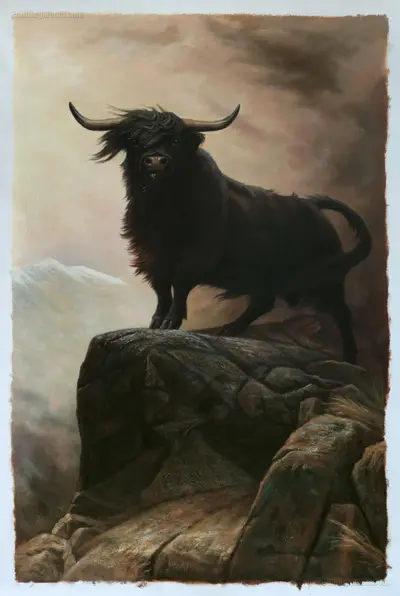
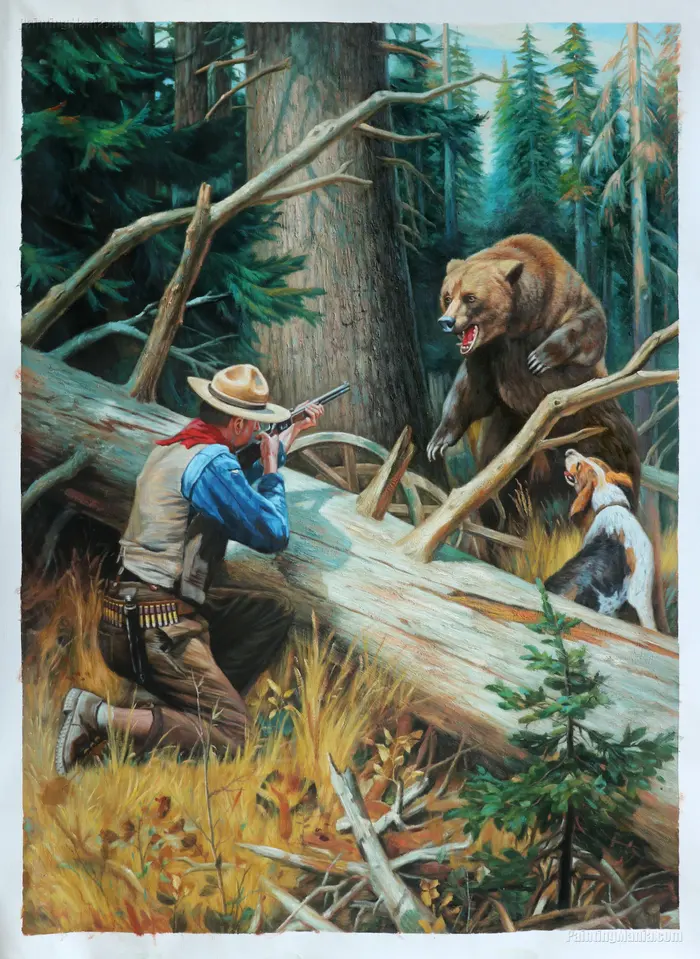
Dangerous Sport - Philip Goodwin - Canvas Oil Painting suits both traditional and modern interiors. As a fine art oil painting, it works as a standalone focal point or as part of a gallery wall gallery wall, and unlike a print it is genuinely hand painted in oils.
Oil on canvas
40 x 28 inches
According to Goodwin authority Dr. Larry Len Peterson, “Philip Russell Goodwin was born on September 16, 1881 in Norwich, Connecticut. Early on he was recognized as a child prodigy, attending the prestigious Rhode Island School of Design when he was only fourteen. He soon caught the eye of America’s most famous illustrator, Howard Pyle, who taught such greats as Maxfield Parrish, N. C. Wyeth, Harvey Dunn, Frank Schoonover, W. H. D. Koerner, and Frank Stick. Pyle founded the Brandywine School in Chadds Ford, Pennsylvania where most of the great illustrators would train. In 1907 when he visited his friend Charles M. Russell in Montana for the first time, Goodwin had already illustrated a dozen books; dozens of magazine articles; three covers of the great magazine of the day, The Saturday Evening Post; and countless sporting advertisements – one of the most famous would be Winchester’s Horse and Rider (1919). Goodwin was only twenty-five years old.
“Some of his most famous bear paintings – a favorite subject – were: A Fighting Chance (similar to Russell’s A Disputed Trail), Who’s Coming (standing bears), A ‘Bear’ Chance (for Nabisco’s Cream of Wheat), It’s a Bear (his last great bear painting, 1933), and A Strenuous Fight, which was first published in December 1924 on the front cover of Outdoor Recreation. Even so, none was better than Dangerous Sport that was filled with unparalleled tension and uncertainty. He would explore variations on this composition in works titled Brought to Bay and Steady, which were also very popular with the American public.
“As an experienced hunter, Goodwin learned much about the daily habits of grizzly bears (Ursus horriblus) from his time spent with Charles M. Russell in Glacier National Park (1907, 1910) and Carl Rungius in the Canadian Rockies near Banff, Alberta (1911). Perhaps because the grizzly bear is the most feared and respected animal in the West, Goodwin often enjoyed placing these animals in his finest predicament paintings. For centuries the grizzly had been the admirable winner of Darwin’s survival of the fittest – that was until the white man arrived. At 600 to 900 pounds, the adult male may stand from forty to forty-eight inches tall at the shoulders and measure six to seven feet from the tail to the nose. The grizzly is distinguished by a thick-set body with a prominent hump of the shoulders and a five-toed paw. Their home range usually varies from five to fifty-five square miles depending on the season and available food sources. Before man, they could be found across many parts of America. They will kill and eat elk, deer, mountain sheep, fish, and even bison. However, they also rely – especially Glacier National Park bears – on nuts, berries, and other vegetation for the bulk of their diet. From experience, on numerous occasions Goodwin observed that an upset bear will rise on its haunches, survey the situation, and retreat, dance around, or if threatened, attack. There lies the predicament in Dangerous Sport. Wary humans and their dogs learned quickly that the grizzly could run up to thirty miles-per-hour. Because of these traits, most big-game hunters in Goodwin’s lifetime considered the grizzly bear the ultimate trophy. In the 1860s a California journalist wrote, ‘If you kill a grizzly bear, it is triumph worthy of enjoying; if you get killed yourself, some of the newspapers will give a friendly notice.’
“With a strong pyramidal composition, Dangerous Sport presents a hunter and his dog bathed by warm sunlight on their backs as they prepare for the worst just as an angered grizzly emerges from the shadows of the dark forest. Perhaps, it is a mother bear defending her cubs who are nestled safely in the woods behind her. Speculation abounds as to the outcome. That always makes for a great predicament and an unforgettable painting.”
As gallery wall art, the piece pairs naturally with other heritage wall art and with warm neutrals, timber, and soft natural light.
We use a 100% hand-painted process: stretched artist-grade canvas, layered oil pigment, and a final protective varnish. There are no inkjet prints or mechanical reproductions in this collection — just a painted fine art artwork made to order.
Build a gallery wall gallery wall around this fine art oil painting, or let it stand alone as a single statement. The hand painted canvas finish keeps the fine art composition looking intentional in both classic and contemporary rooms.
| Size | Price |
|---|---|
| 20 X 24 in | $98.48 |
| 24 X 36 in | $153.48 |
| 30 X 40 in | $197.48 |
| 36 X 48 in | $261.98 |
| 48 X 72 in | $506.48 |
The sizes shown are the reproduction canvas sizes we paint to order. The dimensions given in a work's description refer to the original artwork and will differ from the sizes offered here. Not sure? Read the size guide or e-mail us.
Free on orders over $60; a flat $5 below that. Dispatched in 1–2 business days; 30 days to send it back. Full policy.
Every canvas is painted by hand in oils on artist-grade stretched canvas, with an extra blank border left for framing. How to care for your painting.
Measurements are on the size guide, or e-mail [email protected] and we reply within one business day.