Free shipping on orders over $60$5 flat rate under $604 items: 10% off · 8 items: 20% off
You save $77.97
Free shipping over $60 · 30-day returns · Dispatched in 1–2 business days
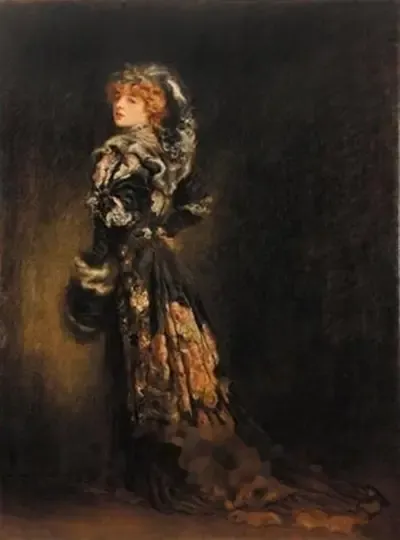
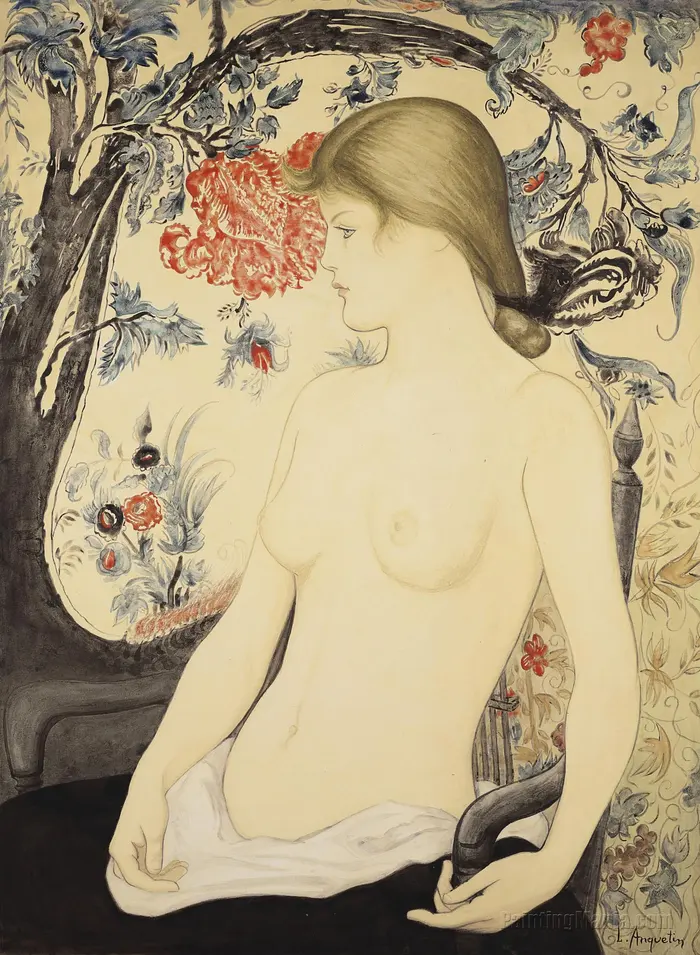
Portrait de Juliette Vary - Louis Anquetin - Living Room Wall Decor suits both traditional and modern interiors. As a portrait oil painting, it works as a standalone focal point or as part of a living room gallery wall, and unlike a print it is genuinely hand painted in oils.
circa 1890
watercolor and inkwash over pencil on paper
32.75 x 24 in. (83.2 x 60.9 cm.)
Private collection, Paris.
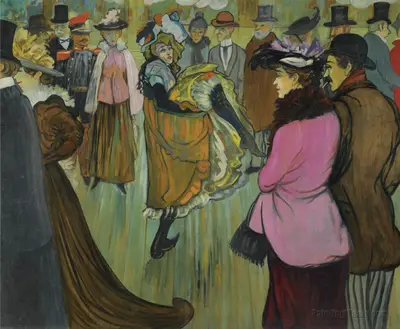
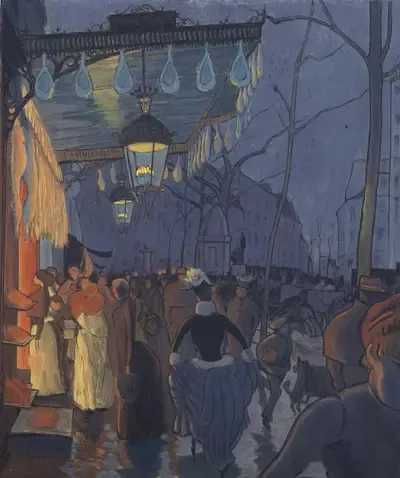
While living in Paris during the mid-1880s, in conversations with his brother Théo, Vincent van Gogh coined the term “painters of the petit boulevard.” He was referring to up and coming artists like himself, who were experimenting with Neo-Impressionism and other avant-garde techniques, and who featured subjects from contemporary city life. Edgar Degas, Claude Monet, Pierre-Auguste Renoir, Camille Pissarro and Alfred Sisley—the established Impressionists—were the masters of the grand boulevard; their dealers, Georges Petit and Paul Durand-Ruel, had galleries located on the large thoroughfares in the center of Paris. Among the painters of the petit boulevard, Van Gogh included his friends Emile Bernard, Henri de Toulouse-Lautrec and Anquetin, all of whom had studied at Fernand Cormon's atelier in Montmartre.
During the late 1880s and early 1890s, Anquetin stood out from this group. John Rewald has noted that “his friends, especially Lautrec, admired the ease and forcefulness with which he expressed himself as an artist, as well as the passion with which he set out to invent painting all over again. Lautrec went so far as to say that since Manet no painter had been so richly gifted as Anquetin” (Post-Impressionism, New York, 1978, pp. 29-30). Anquetin was not yet thirty when he made his own distinctive and innovative contribution to modernism. In an essay in the 1 March 1888 issue of La Revue Indépendante, the critic Edouard Dujardin pointed out “a rather new and novel manner” that he had detected in the recent work of his friend Anquetin: “At first sight, his works proclaim the idea of decorative painting: traced outlines along with strong and fixed colouration...Outline, in quasi-abstract sign, gives the character of the object, unity of colour determines the atmosphere, fixes the sensation” (quoted in B. Welsh-Ocharov, Vincent van Gogh and the Birth of Cloisonism, exh. cat., Art Gallery of Ontario, Toronto, 1981, p. 23).
Anquetin painted Portrait de Juliette Vary during this landmark period in the development of Post-Impressionist modernism. However, his position as a leading modernist lasted only a few years. In 1892, he began to study the work of Peter Paul Rubens, Titian and Tintoretto, which inspired him to undertake what he called his retour au métier, a return to traditional craftsmanship in painting. His friend Bernard also turned to pursue a similar, conservative path during this time. Anquetin nonetheless continued to show with the Groupe Impressionniste et Synthétiste. He remained a close friend of Lautrec, with whom he often shared a table, as well as his unstinting attraction to the petit boulevard and Montmartre night life. Anquetin would likely have met Hélène "Juliette" Vary through Lautrec, who had depicted a series of portraits of the attractive young woman around 1888; as Lautrec was struck by his neighbor's beauty, so too was Anquetin. According to Richard Thompson: "He too set her in half-length and in profile, but this time stripped to the waist and seen against a lurid wallpaper. It is a frank image of sexual display, and critics at the 1891 Indépendants greeted in with pawing prose. Anquetin's somewhat exploitative painting throws us back to Lautrec's, with its almost prim demenanor now besmirched. Between them, the two paintings play with that decadent cocktail of propriety, sexuality and hypocrisy" ("Introducing Montmartre," Toulouse-Lautrec and Montmartre, exh. cat., National Gallery of Art, Washington, D.C., 2005, p. 69).
Every hand painted oil painting in this figurative series is finished on artist-grade canvas and checked against the original before it leaves the studio.
Oil on canvas remains the reference standard for traditional reproductions. Our artists apply pigment by hand, blending the figurative tones directly on the surface for depth that a printed portrait oil painting simply cannot match.
traditional canvas wall art is one of the easiest ways to warm a living room. Pair this piece with natural linen, dark wood, or brushed brass, and let the hand painted surface do the rest.
| Size | Price |
|---|---|
| 20 X 24 in | $77.98 |
| 24 X 36 in | $120.48 |
| 30 X 40 in | $166.48 |
| 36 X 48 in | $221.48 |
| 48 X 72 in | $430.48 |
The sizes shown are the reproduction canvas sizes we paint to order. The dimensions given in a work's description refer to the original artwork and will differ from the sizes offered here. Not sure? Read the size guide or e-mail us.
Free on orders over $60; a flat $5 below that. Dispatched in 1–2 business days; 30 days to send it back. Full policy.
Every canvas is painted by hand in oils on artist-grade stretched canvas, with an extra blank border left for framing. How to care for your painting.
Measurements are on the size guide, or e-mail [email protected] and we reply within one business day.