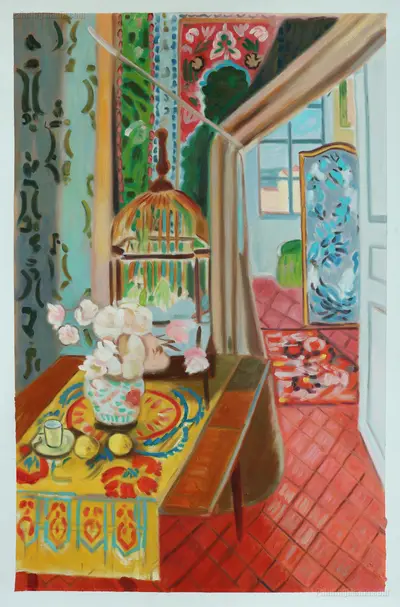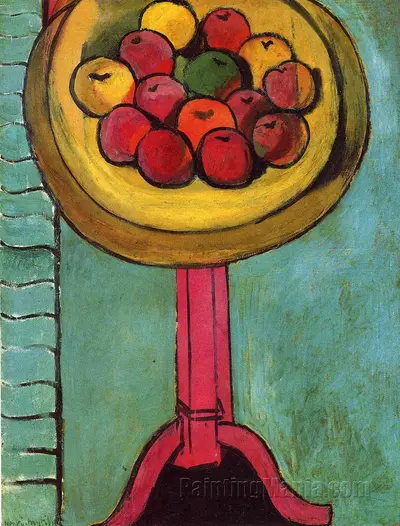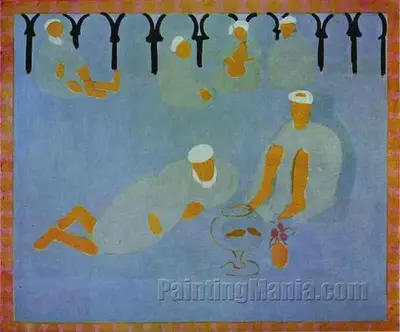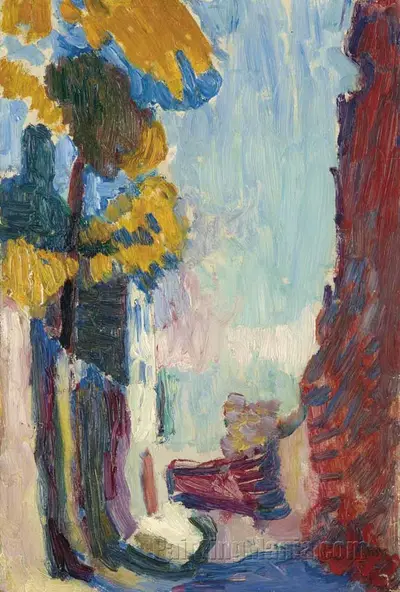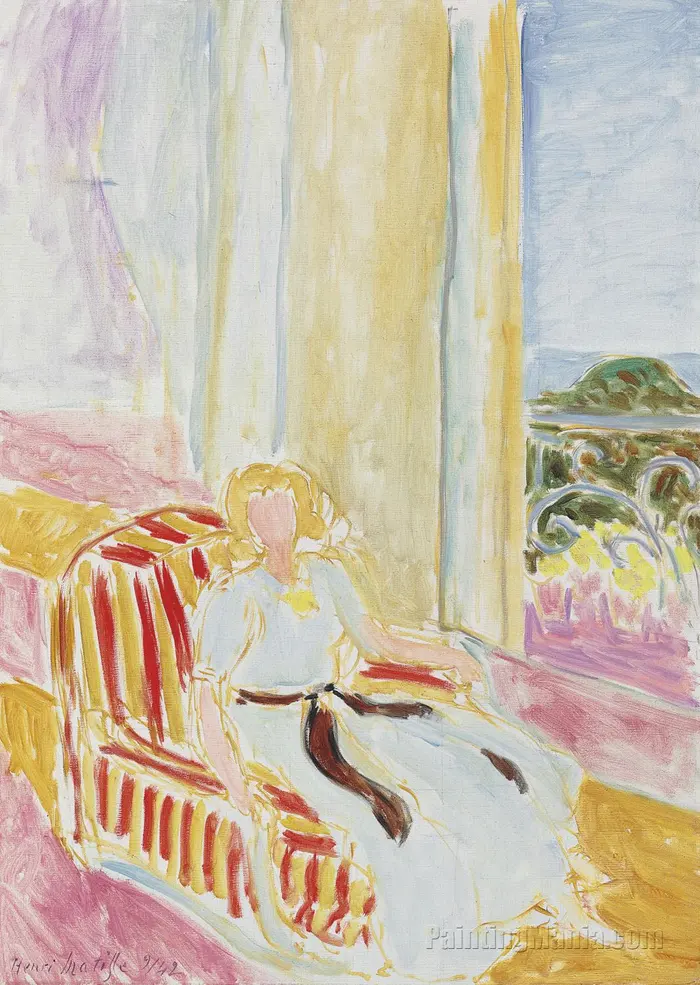
Young Girl in White Dress, Sitting by the Window by Henri Matisse
You save $58.47
Free shipping over $60 · 30-day returns · Dispatched in 1–2 business days
- Category
- Henri Matisse Paintings
- Color
- —
- Shipping
- Dispatched in 1–2 business days
- SKU
- PM59504-2
Young Girl in White Dress, Sitting by the Window - Henri Matisse - Canvas Oil Painting
Product Overview
Choose Young Girl in White Dress, Sitting by the Window as a hand painted oil painting and skip the compromise of printed wall decor. Based on Henri Matisse's original. Our artists rebuild the figurative composition stroke by stroke, producing fauvist canvas wall art with lasting color depth.
About the Artwork
Jeune fille en robe blanche, assise près de la fenetre, September 1942
Oil on canvas
Painted in September 1942, Jeune fille en robe blanche, assise près de la fenetre dates from what Henri Matisse himself defined as his floraison, a flowering that characterised his works during the early part of that decade. This period saw Matisse create several series of serene, lyrical works, including his celebrated Thèmes et variations. The musicality that characterised those works is clearly evident in the languid flowing forms and colours of Jeune fille en robe blanche, assise près de la fenetre.
Matisse's concept of variations was itself linked to music, and was at play in Jeune fille en robe blanche, assise près de la fenetre, as is evidenced by a photograph of the artist's studio wall which shows this picture alongside four sister works. These all display subtle variations of the same theme, showing a woman languidly sitting by a window. There are small shifts in colour, in composition, in angle, but despite this the pictures are clearly linked as they share the same essential genetic make-up, but the result differs each time. A sister work in the Musée Matisse shows the room from a slightly different angle, with more space visible, allowing the artist to focus more on the play of light on the floor, creating stripes of bold colour. These too feature in Jeune fille en robe blanche, assise près de la fenetre in the area surrounding the chair. Thus, overall, there is a deliberate flowing rhythm both within the paintings themselves, and in the over arching exploration of the motif that Matisse has chosen.
The musicality, the sheer lyricism, that infused Matisse's works during 1942 especially were a result of a sudden zest for life that had reinvigorated him after a period of illness and convalescence. The sense of release that Matisse now had, having recovered, led him to refer to himself as being 'completely rejuvenated'-- 'it seems to me that I am in a second life,' he told Marquet (H. Matisse, quoted in J. Cowart et al., Henri Matisse: Paper Cut-Outs, exh. cat., St. Louis, 1977, p. 43). Looking at the works that he was now making, he himself was struck by their boldness and lyricism, as well as the sense of flowing form that characterised everything from his drawings to oils such as Jeune fille en robe blanche, assise près de la fenetre. In a letter to Gotthard Jedlicka, he enthused, 'What I did before this illness, before this operation, always has the feeling of too much effort; before this, I always lived with my belt tightened. What I created afterwards represents me myself: free and detached' (H. Matisse, quoted in ibid., p. 43). This freedom is evident in the absorbing translucence of this picture, with the gold and white areas glowing, bathed in the light of the South of France.
Matisse has heightened the effect of the colours in the room by adding a glimpse of the green and blue of the trees, sea and sky seen from his rooms at the Hotel Régina in Cimiez, overlooking Nice, as well as the ornate railing, which adds an exotic curlicue. The window had long been a recurrent motif, or even obsession, for Matisse, allowing him to include the landscape in an interior, heightening the contrasts between some of the colours and creating a form of picture within the picture itself. When, in 1942, the same year that he painted Jeune fille en robe blanche, assise près de la fenetre, he was asked in a radio interview why he returned so often to the theme of the window, he explained that he showed them:
'Probably from the fact that for me the space from the horizon to the inside of the room is continuous and that the boat which passes lives in the same space as the familiar objects around me: the wall around the window does not create two worlds' (Matisse, quoted in A.H. Barr, Jr., Matisse: His Art and His Public, New York, 1966, p. 562).
Thus the outdoor world and the indoor world are part of the same surroundings, part of the same charmed universe of beauty that the artist inhabited.
In the same interview, Matisse explained that the reason he painted was, 'To translate my emotions, my feelings and the reactions of my sensibility into colours and design, something that neither the most perfect camera, even in colours, nor the cinema can do' (Matisse, quoted in ibid., p. 562). This subjectivity he achieved through his harmonious use of colours, evident in the stripes and lines of unmixed red, yellow, white, blue in Jeune fille en robe blanche, assise près de la fenetre.
To some, it seemed uncanny that an artist could have such a charmed notion of the beauty of the world during the Second World War, which was raging in the background. Some people, however, understood that for Matisse, art and beauty offered a form of salvation, of hope. While he was no political figurehead, he had determinedly refused to leave France despite repeated offers from Varian Fry and others. He was even given the chance to take up a teaching position at an American university; instead, he stubbornly opted to remain in his homeland, a decision that was celebrated by Louis Aragon, the poet, veteran and member of the resistance who had managed to meet Matisse only the previous year. Aragon would come to write again and again about Matisse, whom he perceived as a beacon within the dark world of wartime Europe. One of Aragon's noble missions during this period was to act as an intermediary between the artists and writers who were underground and those who were not, creating a cultural network of mental resistance. In his preface to the book of Matisse's Dessins: thèmes et variations, Aragon hypothesised about what people would think after the War had ended: 'In those days, people will say, they did at least have Matisse, in France... At the darkest point in our night, they will say, he made those luminous drawings' (L. Aragon, Henri Matisse: A Novel, Vol. 1, translated by J. Stewart, London, 1971, pp. 143-44).
During Matisse's own lifetime, Jeune fille en robe blanche, assise près de la fenetre entered the collection of the Belgian industrialist Philippe Dotremont. During the 1950s and 1960s, Dotremont was a pioneering European collector, assembling a range of works by artists such as Karel Appel and Jean Dubuffet, as well as masterpieces by many of the Abstract Expressionists including de Kooning, Motherwell and Rothko. It is perhaps a reflection of the modernity that breathes so effortlessly through Jeune fille en robe blanche, assise près de la fenetre that Dotremont, who felt that much of Europe's art lacked the vigour of its American contemporary, added this picture to his collection. Speaking of his taste, Dotremont explained, 'I never read art critics, and I never listen to anybody's advice. For a canvas to interest me I must feel the chill in my back' (P. Dotremont, quoted in Time, 11 August 1961).
Our artists reproduce this figurative composition in oil on canvas by hand, preserving the tonal range that makes portrait oil painting so sought after for a dining room.
Materials & Craftsmanship
Materials matter for fauvist wall decor. That is why this piece is built on artist-grade canvas with lightfast oil colors, applied by hand rather than output from a printer, and sealed for long-term display.
Specifications & What You Receive
- 100% hand-painted oil painting on artist-grade canvas — never a print or digital reproduction.
- Supplied with a 2-inch blank border on all four sides for flexible dining room display options.
- We dispatch worldwide ourselves, so there are no middlemen in the chain.
- Available canvas sizes for this hand painted oil painting: 20 X 24 in, 24 X 36 in, 30 X 40 in, 36 X 48 in, 48 X 72 in.
- Custom canvas dimensions are welcome for this portrait oil painting.
- Affordable delivery options via DHL, UPS, FedEx, USPS and more.
- We stretch your canvas onto wooden bars at no extra charge, and can arrange custom framing.
- We send a digital image of your figurative painting for approval before it ships.
Styling & Placement
Style it over a fireplace, behind a reading chair, or along a staircase. Wherever it goes, this fauvist oil painting wall decor adds the layered color that only a hand painted canvas provides.
Ordering & Peace of Mind
Sizes & prices
| Size | Price |
|---|---|
| 20 X 24 in | $58.48 |
| 24 X 36 in | $91.98 |
| 30 X 40 in | $123.48 |
| 36 X 48 in | $176.98 |
| 48 X 72 in | $329.48 |
The sizes shown are the reproduction canvas sizes we paint to order. The dimensions given in a work's description refer to the original artwork and will differ from the sizes offered here. Not sure? Read the size guide or e-mail us.
Shipping & returns
Free on orders over $60; a flat $5 below that. Dispatched in 1–2 business days; 30 days to send it back. Full policy.
Materials & craftsmanship
Every canvas is painted by hand in oils on artist-grade stretched canvas, with an extra blank border left for framing. How to care for your painting.
Sizing help
Measurements are on the size guide, or e-mail [email protected] and we reply within one business day.